


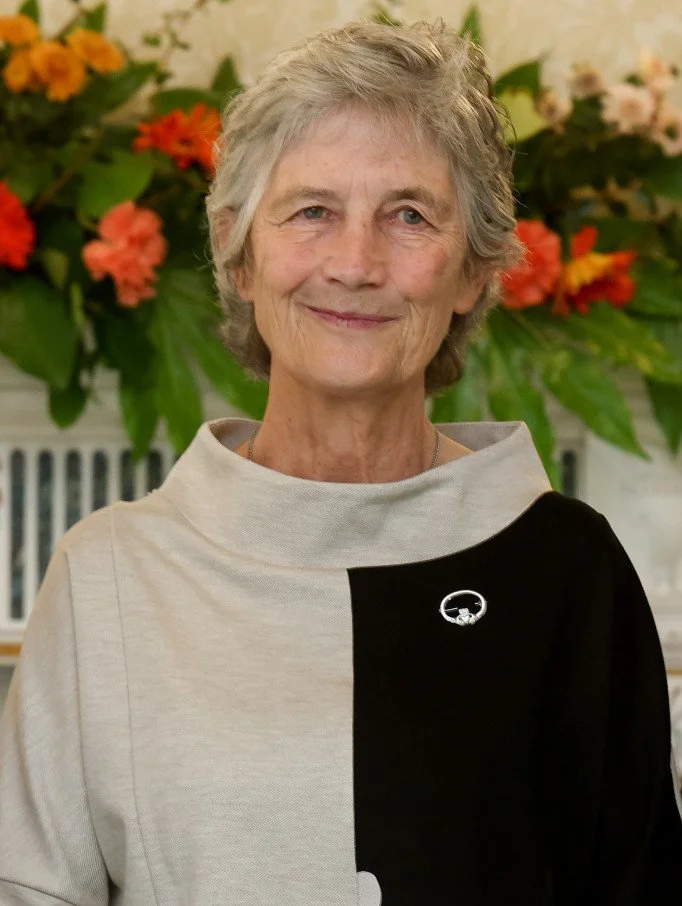
President Catherine Connolly.
Inauguration speech.
“We saw the emergence of hope, we saw the emergence of joy, along with the courage and determination of people to use their voices to shape a country that we can be proud of.”
64%
said Catherine Connolly being elected President was of significance to them.

28 February 2025
Trump and Vance argue with Zelensky in the White House.
70% of the public said this was significant.
Top Stories Beyond Ireland
In contrast to the locally grounded stories shaping daily Irish life, a parallel set of global events exerted a more indirect - yet deeply influential - pressure on national sentiment and confidence.
In February, Donald Trump’s return as US President (70% of people thought was significant) immediately set the tone for a year marked by geopolitical uncertainty. This was reinforced in March, when Trump and Vice President Vance clashed publicly with President Zelensky in the White House (70%), amplifying perceptions of instability among global powers.
In April, Ukraine peace talks between the US and Russia (66%) signalled fragile progress, but are still on-going in December.
Across the year, Gaza remained a central emotional and moral focus for people in Ireland. By August, reports of soaring starvation levels as the US and Israel withdrew from peace talks (67%) sharply heightened public concern, especially following earlier hopes when in February Israel and Palestine agreed a ceasefire (67%). The contrast between anticipation and disappointment deeply shaped public consciousness.
As well as violence, the impact of the climate and humanitarian crisis was also on our mobile screens. In February, wildfires in California (67%) underscored the escalating human and environmental toll of global disasters, while the Myanmar earthquake in March (64%) served as another reminder of global vulnerability.
Also in early 2025, Trump’s imposition - and subsequent suspension - of US tariffs (66%) added to economic unease. Later in June the US airstrikes on three nuclear sites in Iran (66%) intensified public fears around escalating conflict.
These events, though not directly impacting daily Irish routines, significantly shape national mood.
They reinforce a sense of global instability, driven heavily by Trump’s highly visible actions across the year. Gaza’s humanitarian crisis and failed ceasefires resonated deeply with Irish audiences, while ongoing conflicts in Ukraine sustained anxieties about the future.
Collectively, these stories cultivated an environment where uncertainty feels ever-present.
Half the Country Felt It:
Ireland through to World Cup play-off
Became a Defining National Moment
The Joy, the Drama, the Escape:
Pop Culture and Sport’s Role in an Intense Year
Some of the stories that reached the highest levels of public awareness this year were not necessarily those viewed as impactful on daily life. Yet pop culture and sporting moments still played an essential role in shaping conversations at the start or the year encouraging people to tackle challenging topics, while later in the year, offering lightness and relief during moments marked by intensity.
In April, one of those conversation starter moments was the viral Netflix series Adolescence with 47% of people saying this was significant. For many, this sparked a first-time national discussion about misogyny online and how internet culture is influencing young adults offline.
In May, when criticism of Irish band Kneecap (48% feeling it was a significant moment) over comments on Israel ignited wider debates about freedom of speech, political expression, and solidarity with humanitarian movements.
As summer arrived, the tone softened. In June, broadcaster Joe Duffy announced he was hanging up his headphones and mic after 37 years on Liveline (49%), while in the same period, celebrated jockey Rachael Blackmore retired (39%). By August, a viral Coldplay concert moment put a CEO at the centre of allegations (30%), generating amusement, ridicule and sympathy in equal measure.
August and September finally brought the levity many craved: Oasis played reunion shows at Croke Park (35% said was significant), flooding audiences with nostalgia, while the engagement of Taylor Swift and Travis Kelce (26%) briefly turned the internet inside out. The Traitors Ireland launched on RTÉ in September (31%) and quickly became a national water-cooler obsession. Also in September, Team Europe’s Ryder Cup victory (46%) provided a burst of sporting pride.
But the moment that truly lifted the country came in November, when Troy Parrott’s hat-trick and follow-up performance pushed the Irish Men’s National Football Team into the World Cup play-offs (52%). With over half the population viewing it as significant, it delivered much-needed hope at the end of an emotionally heavy year.
Pop culture and sport played a crucial emotional counterweight to a year dominated by heavy political, economic and humanitarian news.
High awareness levels showed their power to spark national conversations - whether about online misogyny, freedom of speech, or shifting cultural norms. Moments of nostalgia, humour and collective pride - from Oasis to The Traitors Ireland to the Irish football team - provided welcome relief.
Together, these events shaped a cultural landscape where entertainment offered both reflection and respite, helping people navigate an otherwise intense and uncertain year.
Curious?
Contact Core Research to learn more about this study and how it can inform your plans for 2026.
Simply share your details and a member of the team will be in touch.