

What influenced culture in 2025?
Across 2025, we interviewed 12,000 adults across Ireland, asking them about the biggest stories shaping each month across the year - spanning politics and public affairs, sport and entertainment, pop culture, economics and more. We measure not just what happened, but what truly broke through.
First, we ask which stories people were aware of, giving us a clear read on national attention and engagement.
More importantly, we explore how significant each story felt in people’s own lives - whether it influenced their thinking, affected their behaviour, or shaped conversations in their homes and communities.
By combining these two dimensions - awareness and personal importance - we create the Cultural Index: a single score that identifies which moments, news headlines and cultural events have the greatest impact on public sentiment. It reveals what really resonates, what fades, and what defines the cultural climate of Ireland each month.

So what stories had the highest public awareness?
Scroll left and right to explore
But awareness, is different to significance.
When asked about importance, one story came out on top.
#1 News Event of 2025
Storm Éowyn hit Ireland with highest ever recorded winds, and resulting in the highest number of people without electricity, water and telecommunications.
80% of people said this was of great significance.
Across 240 news events,
some categories dominated more than others.
Click bubbles to explore
Top Stories Impacting Ireland in 2025
In a year shaped by disruption and resilience, several locally grounded stories significantly influenced Irish culture, confidence and everyday conversation.
Early in the year, Storm Éowyn delivered record winds and widespread outages, becoming the most personally significant story of 2025 for the public (80%).
Also in February, the decision to reduce rural speed limits gained strong public traction, highlighting daily commuting realities and shared concerns about road safety (68%).
In the months that followed, affordability pressures came to define much of the national mood. By October, grocery inflation had reached its highest level in nearly two years, a quietly powerful story reflecting the strain on household budgets (68%).
These economic anxieties shaped sentiment across the year. Starting in January, the minimum wage rose to €13.50 per hour, perceived as an essential measure for workers most exposed to the high cost of living (66%). Yet November brought stark reminders of inequality, with homelessness numbers rising again - including more than 5,000 children without a home (65%).
Political and societal debates also intensified. In April there was major concern over US tariffs that threatened up to 80,000 jobs (64%), while in November, the Government moved to tighten immigration rules (65%).
But the year also offered moments of renewed optimism: in November, Catherine Connolly’s election as President - earning a record 914,143 votes - was viewed by 64% as a significant and hopeful moment for Ireland.
Several clear themes unite these stories. Affordability and economic insecurity remained dominant, shaping reactions to grocery inflation, wage increases and job-threatening tariff disputes. Daily-life safety and social wellbeing also featured strongly, seen in debates on speed limits, rising homelessness and the impact of severe weather.
Societal cohesion and identity emerged as another major thread, reflected in heightened discourse around immigration and in the public’s strong endorsement of new presidential leadership.
Together, these themes point to a nation balancing immediate pressures with a continued desire for fairness, stability and a sense of collective direction.
Declining Awareness,
Rising Urgency
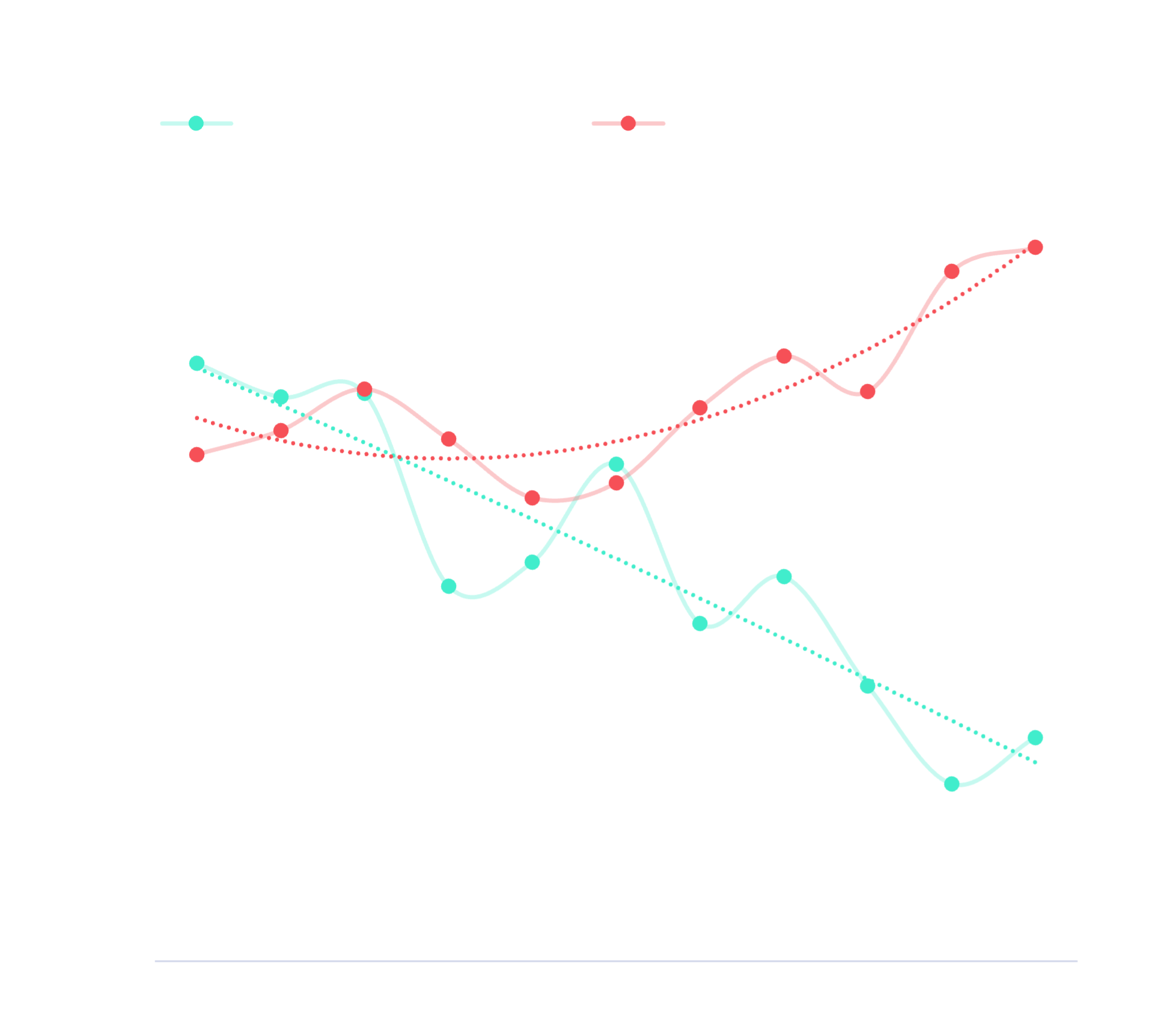
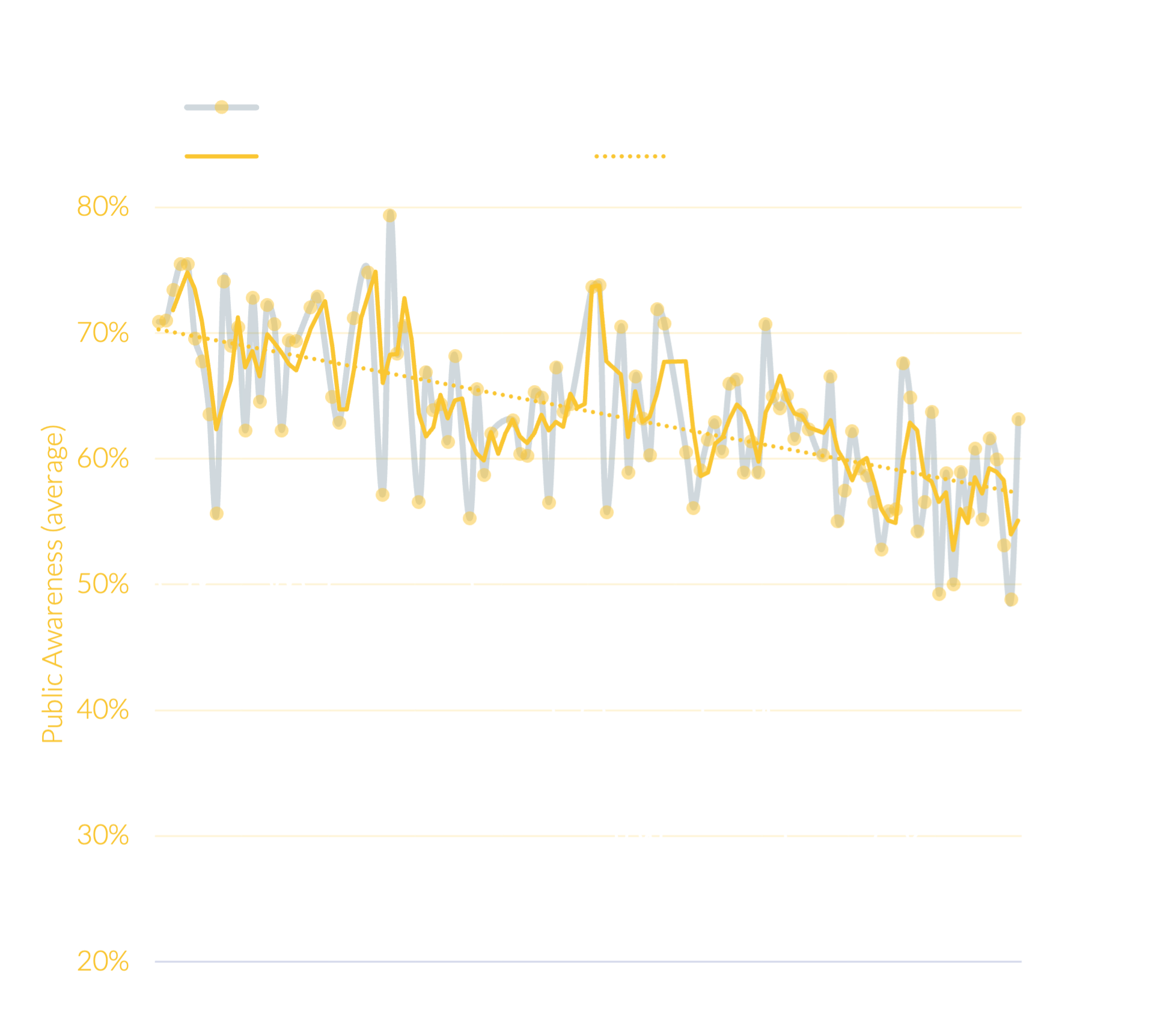
Analysis of more than 2,500 news stories since 2015 shows a decline in public engagement with news in Ireland. Average story awareness has fallen from close to 70% in 2015, rising briefly during COVID before declining again over the past five years. This may reflect shifting consumption patterns.
Yet among those still engaging, perceived importance has increased - from roughly 65-70% up to over 70% today - suggesting that while fewer people follow the news, those who do see it as increasingly significant amid global and economic uncertainty.


Re-Engaging Audiences,
Rebuilding Confidence
As people attribute greater significance to news events, it’s important to consider the wider impact on consumer sentiment. While news awareness has declined since 2015, people may increasingly be turning to alternative sources of information - content that explains the world but doesn’t necessarily meet journalistic standards.
Many stories revolve around social and economic issues, and during the same period, sentiment has also fallen from its pre-2020 peak.
This raises a critical question: if people are disengaging from news, where is their worldview being shaped?
The challenge - and opportunity - is to re-engage the public with credible information that builds understanding and confidence in the future.