
How the Digital Markets Act Is Changing Google Search in Ireland and the EU

Google Search is changing across Ireland and the wider European Economic Area (EEA), with the Digital Markets Act (DMA) reshaping how Google presents search results and how competing services can access the search ecosystem.
For Irish brands, these changes should not simply be viewed as another regulatory requirement for Google. These changes are evolving the search journey itself, particularly for consumers researching products, prices, hotels, flights and other services. As brands begin planning for 2027, understanding this new search environment will be increasingly important.
What is the Digital Markets Act?
The Digital Markets Act is EU legislation designed to make digital markets more open and competitive. It places specific requirements on large technology platforms designated as ‘gatekeepers’, including Google.
One important area is how Google treats its own services within search results. In July 2026, the European Commission found that Google had breached the DMA by giving preferential treatment to its own services, including shopping, hotels, transport and sports results, over competing third-party services. Google received a €460 million fine relating to this element of the Commission's decision.
The DMA is also opening other parts of Google's ecosystem. From January 2027, Google must begin sharing anonymised search data with eligible competing search providers. This includes ranking, query, click and view data intended to help other search services develop and improve their own products.
For users, the broader objective is straightforward, more choice and greater competition within search.
How Has the Digital Markets Act Affected Google Search?
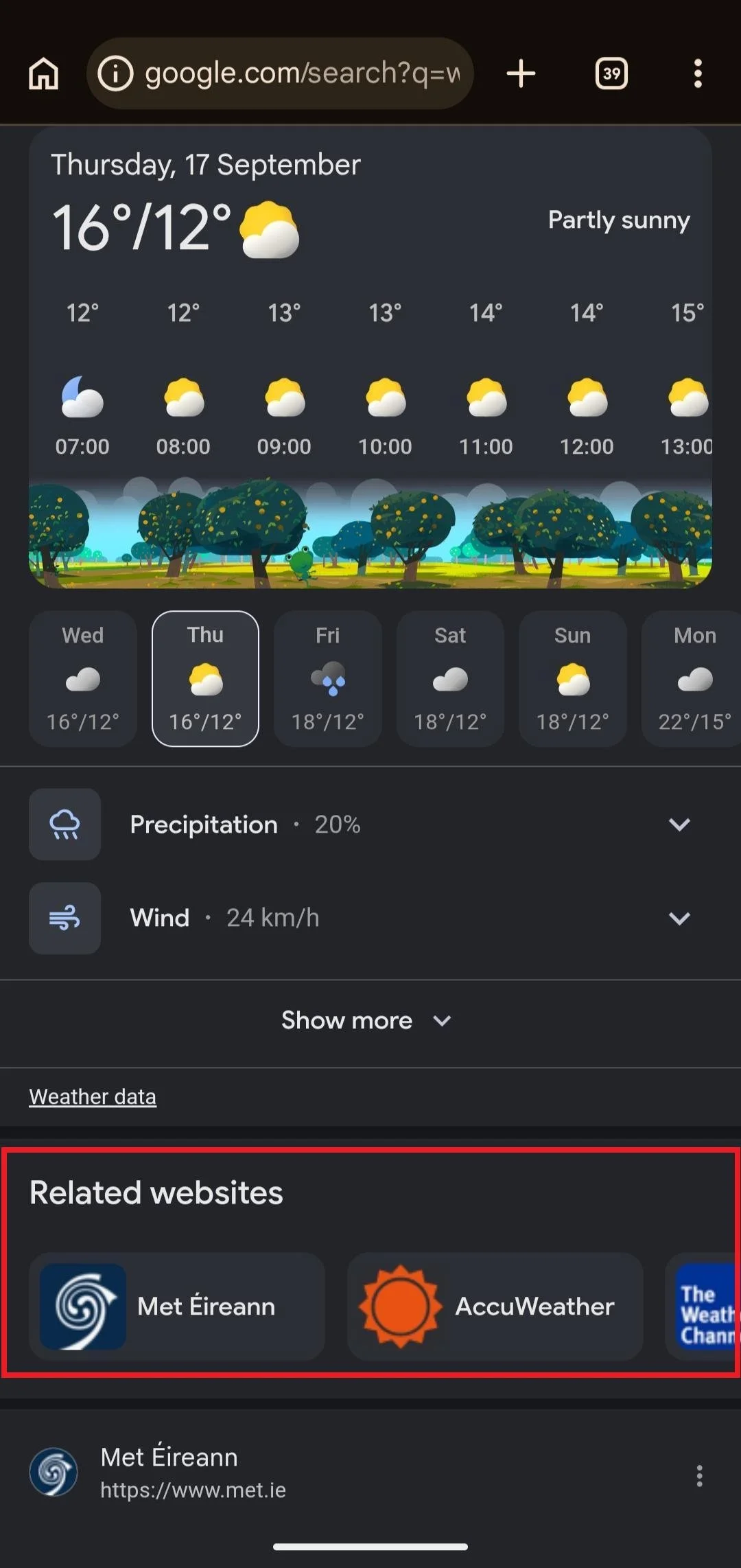
The most visible change for Irish consumers arrived in September, when Google redesigned certain commercial search results across the EEA.
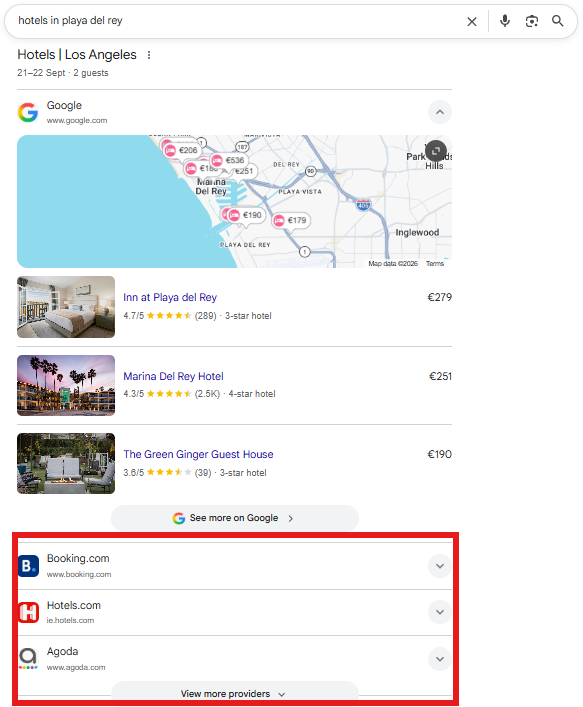
For searches involving areas such as hotels, flights, transport and products, eligible comparison services can now appear within dedicated search units. Direct suppliers can also appear within a separate unit alongside them.
Google has been critical of the change. It told news outlets that the new experience represented a significant reduction in search quality, arguing that it gives greater prominence to comparison services and removes some useful information from its previous search experience. Google has also said earlier DMA-related changes contributed to a 30% reduction in free direct booking traffic to European businesses.
However, Google's definition of search quality is not necessarily the same as a consumer's definition of a useful search result.
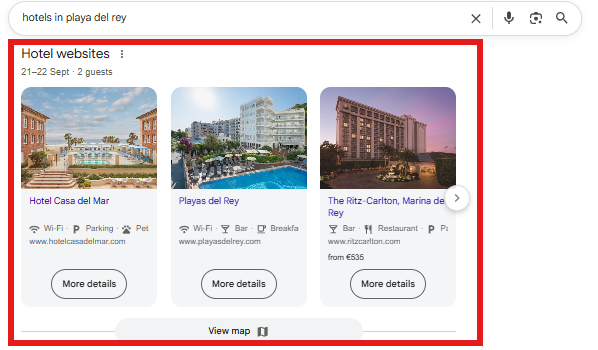
The search engine giant has also replaced the old ‘Places Sites’ feature on some SERPs with a new ‘Hotel Sites’ feature to make individual domains more visible.
What Does This Mean for Irish Brands
From Core’s perspective, greater choice during the research stage of the customer journey can be a positive development.
When somebody searches for a hotel, flight or product, they are not necessarily looking for Google to decide which route they should take next. Giving consumers greater access to comparison services and different suppliers can help them explore prices, brands and options before making a decision.
This is where the distinction around ‘quality’ becomes important. Google can measure changes through signals such as clicks, reformulated searches and direct traffic. Consumers may judge quality differently. A search experience that requires slightly more exploration could still be valuable if it helps somebody compare more options and ultimately find the brand, product or price that best meets their needs.
For Irish brands, the opportunity is therefore to think beyond traditional rankings. Visibility across the wider research journey could become increasingly important as consumers move between Google, comparison services, direct supplier results and, increasingly, AI-powered search experiences.
What Does This Mean for Marketing Strategies and Tracking in 2027?
The changes should encourage Irish marketing teams to look at search as an ecosystem rather than a single results page.
SEO and paid search remain important, but brands should understand where else consumers are discovering and comparing them. For relevant sectors, this could include comparison services and aggregators alongside direct search visibility. Search teams should also monitor how the new result formats affect click-through rates, traffic patterns and conversion journeys rather than assuming that a change in Google traffic automatically represents a decline in consumer demand.
Measurement will matter too. Google's requirement to share anonymised search data with eligible competing search engines from 2027 is intended to help alternative search services improve, potentially supporting greater competition over time.
For Irish brands, 2027 search planning should, therefore, consider where the brand needs to be visible throughout a more fragmented discovery journey, how performance is measured across those touchpoints, and whether existing SEO and paid search reporting provides the full picture.
The DMA is not making search less important. It is making the search landscape broader and a more even playing field. For brands willing to understand that change, there are new opportunities to reach consumers while they research and compare their options.
If you are planning your 2027 search strategy and want to understand what these changes could mean for your brand, get in touch with Core to discuss how your approach to paid and organic search may need to evolve.