
Google’s Branded Queries Filter Simplifies SEO Reporting for Marketers
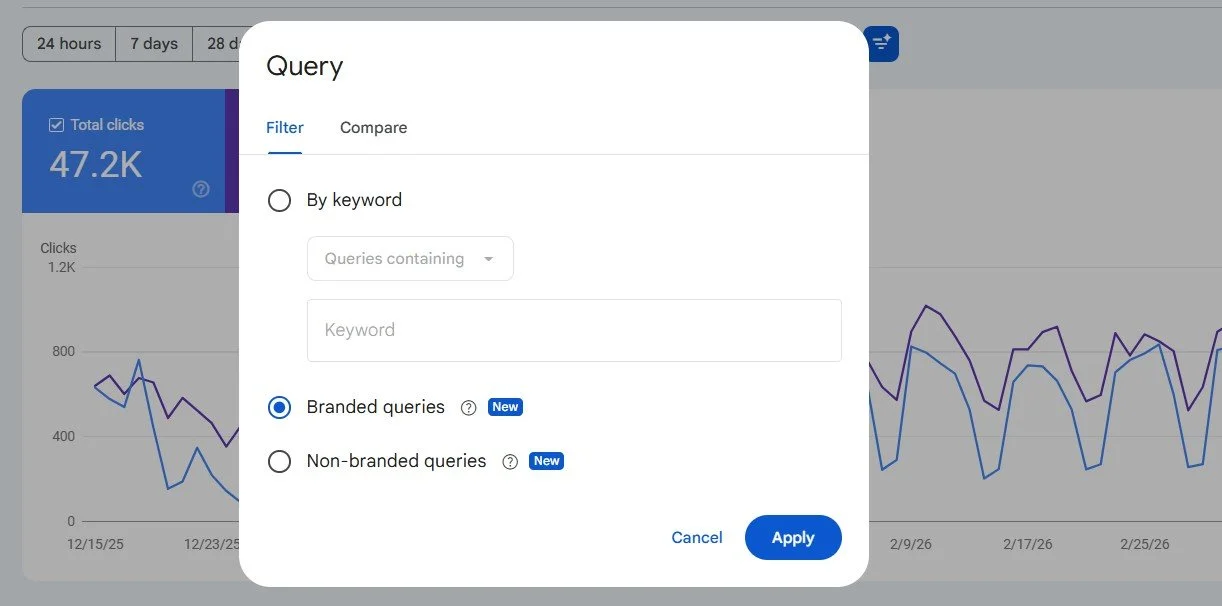
Almost four months after its initial announcement in November 2025, Google has confirmed that its branded queries filter is now available to all eligible sites in Search Console.
Aimed at addressing one of the long-standing challenges in SEO reporting, this tool allows marketers to analyse website performance by query type directly within the Search Console Performance report.
For the first time, it is now possible to separate branded and non-branded search performance natively, without relying on manual regex or external tools.
Why Branded vs Non-Branded Query Analysis Matters
Branded and non-branded queries reflect two distinct types of search behaviour.
Branded queries include searches that contain your business name, product names, variations or misspellings. These typically indicate users who are already familiar with your brand.
In contrast, non-branded queries capture discovery as they show how users find your site without prior awareness.
This distinction matters because it changes how you interpret SEO performance:
Branded traffic often signals brand strength and demand
Non-branded traffic reflects actual organic visibility and growth
Combining both without separation can inflate perceived SEO success
Separating these query types gives a clearer view of what is driving traffic and where opportunities exist.
How Does Branded Queries Filter Work?
The branded queries filter is built directly into the Performance report in GSC. It allows users to segment data into branded and non-branded queries.
Once applied, the filter updates key metrics such as clicks, impressions, CTR, and average position based on the selected query type.
Unlike manual filters, Google uses an AI-assisted system to classify queries, including brand names in all languages, variations and misspellings, product or service associations, or even queries without explicit brand mentions but clear intent.
Importantly, this is a reporting feature. It does not impact rankings or how your site performs in search results.
There are also eligibility requirements. The filter is not available for sub-properties or sites with very low query volume.
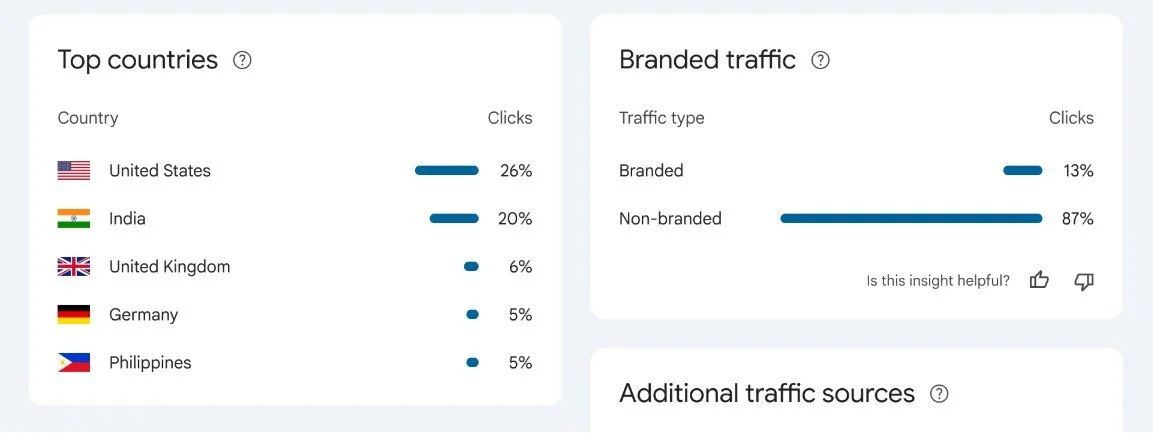
Additionally, Google has added a new feature within the Insights report showing the breakdown of total clicks for branded versus non-branded traffic.
“It will help you measure brand recognition and compare the volume of traffic from people already familiar with your brand to the volume of traffic from those who didn’t explicitly intend to visit your site,” Google said in a blog post.
What This Means for Irish Brands
For Irish businesses, this update brings more clarity to how SEO performance is measured and communicated.
First, it allows brands to separate brand-driven traffic from SEO-driven discovery. This is especially useful in competitive sectors where branded traffic can mask gaps in visibility.
Second, it improves reporting accuracy. Teams can now show whether growth is coming from increased brand demand or improved rankings for non-branded keywords.
Finally, it supports better strategic decisions. Irish brands expanding into new markets can track whether they are building awareness or simply capturing existing demand.
At Core, our SEO services use this level of segmentation to help Irish brands prioritise the right mix of brand building and search visibility, ensuring long-term growth rather than short-term gains.
FAQs: Branded Queries Filter
What is branded query?
A branded query is a search that includes your brand name, variations, misspellings, or brand-related products and services.
What is the branded queries filter in GSC?
A filter that separates branded and non-branded search queries in performance data.
Where can I find branded queries filter in GSC?
In the Performance report under query filters.
Why is branded queries filter important for SEO?
It helps distinguish brand demand from organic discovery.
Is branded query filter available for all websites?
No, the branded query filter is only available for eligible sites with sufficient data and top-level properties.
Learn More:
GSC Now Supports Custom Annotations in Performance Charts