
Google introduces multimodal search reporting in Search Console
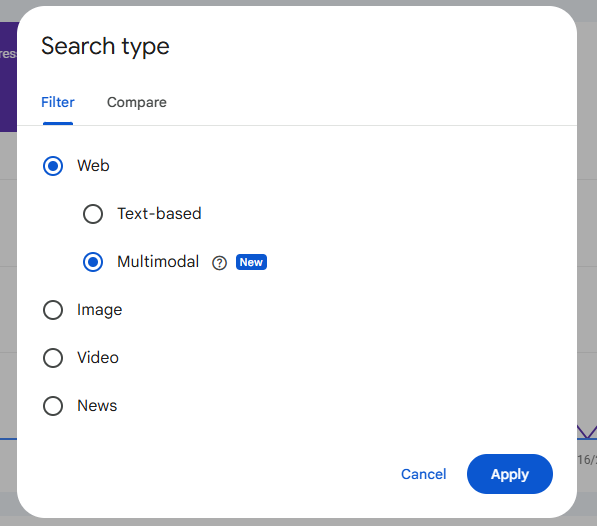
Google has introduced a new multimodal search filter in Search Console, giving brands greater visibility into how people discover their content when an image forms part of their search.
Google has been hard at work rolling out changes to Search, from new GoTo URLs that let users jump directly to relevant sections of a page to new ways of searching beyond the traditional search box. The latest update reflects this shift, with people increasingly able to search using photos, screenshots and objects they see around them.
What is multimodal search?
Multimodal search goes beyond traditional text queries by allowing people to search using different types of input. Google has described its wider vision for Search as enabling people to find information by combining images, sounds, text and speech.
While multimodal search can take different forms, Google's new Search Console reporting currently covers searches where images are used as part of the search.
| Search feature |
How it works
|
|---|---|
| Google Lens |
Take or select a photo and search based on what appears in it.
|
|
Circle to Search
|
Circle something on an Android screen to search for it without leaving the app.
|
|
Image uploads
|
Upload an image directly to Google and search using it.
|
| Chrome – ‘Search this image’ |
Right-click an image in Chrome to find related information.
|
These searches are now grouped together under Web: Multimodal in Search Console.
What can brands now see?
The new filter allows brands to see clicks, impressions, CTR and average position for multimodal searches, with performance also available by page, country, device and date.
This means brands can start identifying which pages are being discovered through visual search, rather than only looking at their overall Google Search performance.
One limitation is that Google does not currently provide the individual queries behind multimodal searches, or separate performance for Lens, Circle to Search and the other visual search methods.
The filter is also available within Google's Generative AI performance reporting, providing further insight into multimodal visibility across AI features such as AI Overviews and AI Mode.
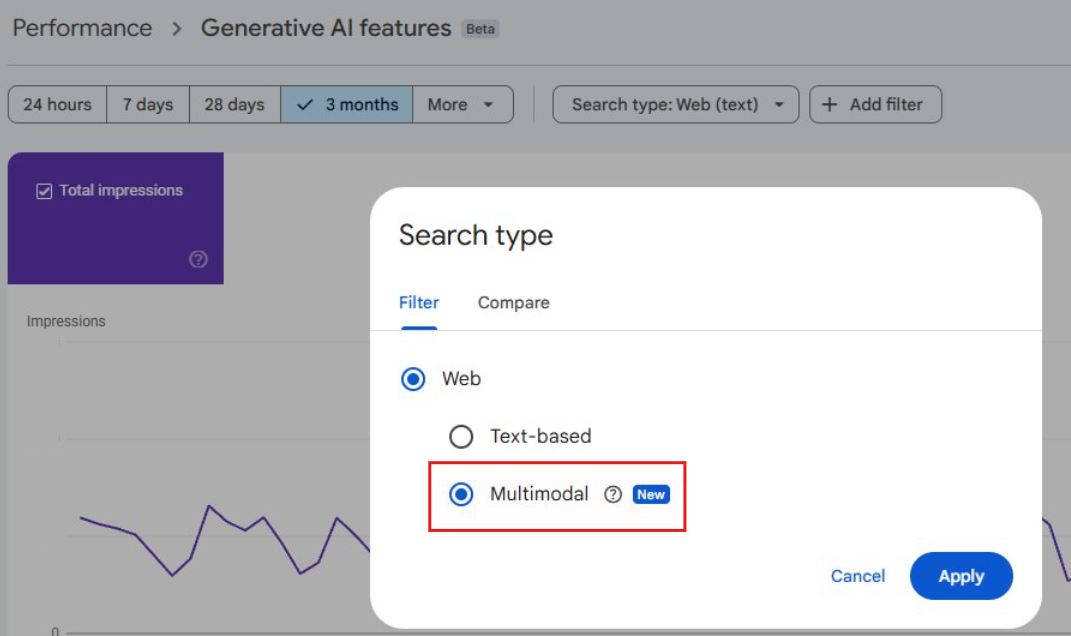
It can also be used across Search Console's platform properties, meaning brands can analyse multimodal visibility for content across platforms such as Instagram, TikTok and YouTube, as social content becomes increasingly visible within Google Search.
What does this mean for Irish brands?
For businesses where images are an important part of the customer journey, such as retail, travel, automotive, food and property, the update provides a clearer way to understand the value of visual search.
The new reporting also arrives at a time when Google Search is undergoing wider changes across Ireland and the EU, with the Digital Markets Act introducing new requirements around how Google operates and shares certain search data.
While the new multimodal reporting has not been directly linked to these regulatory changes, it forms part of a broader shift towards giving marketers greater visibility into increasingly fragmented search journeys.
This can help answer practical questions such as:
Which pages are people discovering through images?
Are there pages performing better through visual search than traditional search?
Is multimodal visibility particularly strong on mobile?
Which areas of the website could benefit from better imagery?
Most importantly, it gives brands real performance data to support investment in image optimisation, rather than treating it simply as an SEO best practice.
What should brands do next?
The first step is simply to benchmark multimodal performance in Search Console and identify the pages already receiving impressions and clicks.
Brands can then work with their SEO team to review the imagery on these pages and look for opportunities around high-quality original images, descriptive alt text and file names, relevant structured data, crawlability and mobile experience. These areas also align with Google's broader guidance around using high-quality images and video alongside established SEO best practices.
As more data becomes available, multimodal reporting should give brands a better understanding of how customers are discovering their content beyond traditional text searches, and where visual content can play a greater role in their SEO strategy.
Learn more about the latest changes in Google Search Console:
FAQs about multimodal search
-
Multimodal search allows people to search using different types of input rather than relying solely on typed text. This can include images, sounds, text and speech. Google's new Search Console multimodal reporting currently covers searches using images, including Google Lens, Circle to Search, image uploads and Chrome's ‘Search this image’ feature.
-
Within the Search Console Performance report, select the Search type filter and choose Web: Multimodal. This allows you to isolate performance from multimodal searches and analyse metrics such as clicks, impressions, CTR and average position.
-
No. Google currently does not provide individual query data for multimodal searches. However, you can see which pages receive multimodal visibility and analyse performance by dimensions such as country, device and date.
-
Brands should focus on using relevant, high-quality images and ensuring they are accessible to Google. Image optimisation can include descriptive alt text and file names, appropriate structured data, crawlable images and a strong mobile experience.
-
Yes. The multimodal filter is also available within Google Search Console's Generative AI performance reporting, providing insight into multimodal visibility across AI features such as AI Overviews and AI Mode.
